No Timetable for Moving Forward
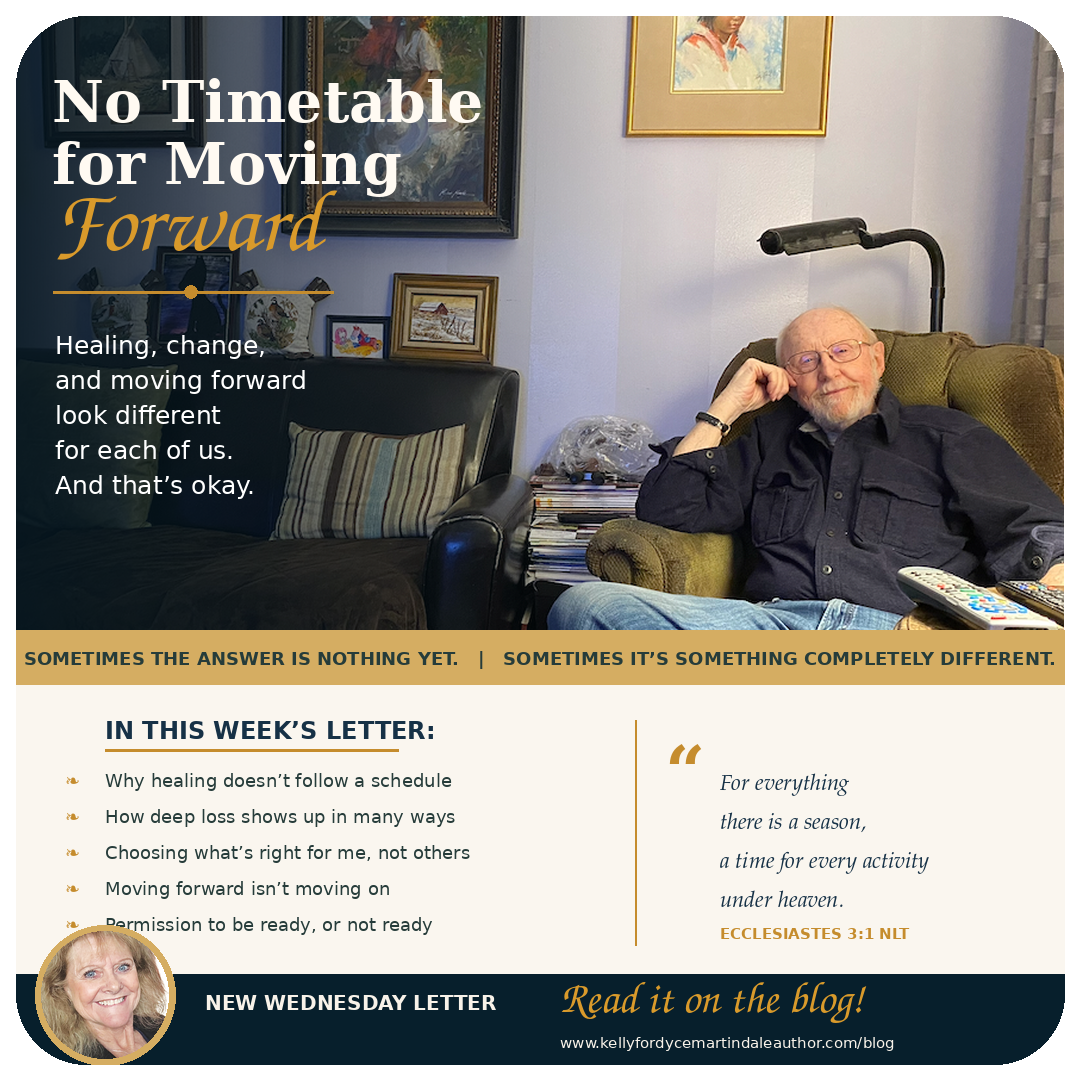
After my dad’s wife died, he didn’t change much of anything.
Her things stayed where they’d been. The house remained much as she’d left it. For him, there wasn’t any sudden cleaning out of closets, redecorating rooms, or getting rid of reminders of the life they’d shared.
Other people respond completely differently.
I’ve known widows who’ve begun cleaning out their husband’s belongings almost immediately. Others have started traveling extensively, visiting places they’d always wanted to see or discovering what life looked like on their own. Some people sell their homes. Others remodel them from top to bottom. New paint. New furniture. New landscaping. Sometimes changing our surroundings seems to help us begin figuring out who we are now.
Which response is right? Maybe all of them.
Grief doesn’t come with a timetable, and moving forward doesn’t have a particular appearance. Sometimes we forget that when we’re watching someone else grieve.
We see a woman donating her husband’s clothes only weeks after his death and wonder how she can possibly do it so soon. We see someone whose spouse has been gone for years and wonder why the closet still looks the same.
We might think the widow who suddenly starts traveling is running away from her grief. We may wonder why another widow rarely leaves home. But we don’t know what those decisions mean to the person making them.
For one woman, opening a closet filled with her husband’s clothes may be painful every single morning. Giving them away may bring relief. For another, seeing those same clothes may provide comfort. Removing them before she’s ready could feel like losing him all over again.
Neither woman is grieving incorrectly.
And I don’t think this is only true when someone dies.
Deep loss comes in many forms.
After a divorce, one person might immediately remove photographs and rearrange the bedroom. Someone else may need months before she can touch anything.
After our children leave home, one mother might turn a bedroom into a sewing room almost immediately. Another may leave the room untouched because she isn’t ready for that chapter of motherhood to feel finished.
Retirement can bring similar changes. One person sells the house, buys an RV, and heads across the country. Another finds enormous comfort in staying home and maintaining familiar routines.
Estrangement can leave us surrounded by photographs and possessions belonging to someone who’s still alive but is no longer part of everyday life. There isn’t even a funeral or socially recognized ending to mark what’s been lost.
The loss of a friendship, a career, financial security, physical abilities, a marriage, a dream, or the future we thought we’d have can leave us asking the same question:
What am I supposed to do now?
Sometimes my answer has been nothing yet. Other times it’s been something completely different.
I’ve learned that I need to give other people the freedom to discover that answer for themselves.
And I need to give myself that same freedom.
There’ve been things I’ve been ready to change and others I haven’t been able to touch. Sometimes I’ve surprised myself by suddenly being ready for something I couldn’t have imagined doing a month or a year earlier.
Maybe that’s part of healing too.
There’s no universal moment when it’s suddenly time to clean out the closet, sell the house, take the trip, change the bedroom, make new friends, remove a wedding ring, or try something completely new.
Being ready doesn’t mean I’ve forgotten. Not being ready doesn’t mean I’m stuck.
Moving forward isn’t the same thing as moving on.
I’ve never particularly liked the phrase “moving on” after deep loss because it sounds as though I’m supposed to leave behind the person, relationship, dream, or life that mattered to me. I don’t have to erase what came before to live what comes next.
For me, moving forward means gradually learning how to carry my losses into the life I still have.
Ecclesiastes reminds me, “For everything there is a season, a time for every activity under heaven.” (Ecclesiastes 3:1 NLT)
My season won’t necessarily look like someone else’s. My timetable won’t either. And I certainly don’t need someone standing beside me with a stopwatch.
Instead of asking myself, “Shouldn’t I be further along by now?” I’m learning to ask a different question:
“What am I ready for now?”
Sometimes the answer is a change.
Sometimes it’s waiting.
Both can be part of healing.
I’m allowed to be ready when I’m ready.
And I’m allowed not to be ready when I’m not.
Prayer:
Lord, help me stop measuring my healing against someone else’s journey. Give me wisdom to know when it’s time to hold on and when it’s time to make a change. Help me move forward at the pace You know is right for me, carrying what I’ve loved without being afraid of the life that’s still ahead.
Amen
I’d love to hear from others carrying deep loss. What’s something that once felt impossible to change but eventually felt right, or something that still isn’t ready to be changed?
